

Little Ghost Selves
undoings and coming home

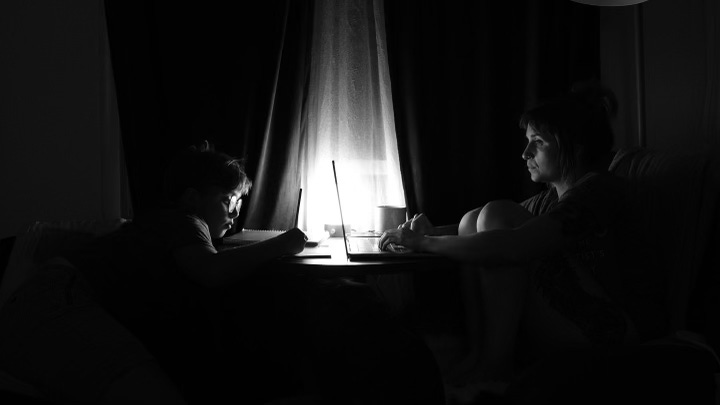
The Girl I Was
The first time I ripped up my journals, I was 13. Cross-legged on the floor of my neon green room, boombox playing softly beside me, I sat surrounded by spiral-bound notebooks filled with the angsty scrawl of my adolescent self.
Filling the pages were musings about the effortlessly cool skater boys with their unbrushed curls. I knew their quiet exterior was masking something deeply poetic (it wasn’t). About the girls, I wanted to fit in with them but didn’t. About adopting a “ditzy” persona because skipping a grade in elementary school had only made me a target. About the time I was running for class secretary, a boy made fun of “permanent sunburn” (read: rosacea), and I cried in front of everyone (even more embarrassing). About my intrusive thoughts and fears, which would later be diagnosed as OCD but were still just “silly” and “quirky.”
I ripped out page after page, tearing them 12 opposite ways (as if tearing them into 12 pieces would somehow make them more unreadable than, say, six pieces) in case someone, somewhere, dared to put them back together and read the words I was too ashamed to bear. I attempted to bury another piece of me with each discarded entry — no ceremony about it, just tiny paper towns built from pubescent shame.
I didn't know then that she—that earnest, flawed girl so desperate to be accepted—could never be erased. Instead, I added her to my collection of ghosts, joined over the years by other versions of myself I retired and exiled.
I liked to visit them occasionally when I was up for some mild self-torture time, just to make sure they stayed gone— my lessons learned— a hall of fame for my past mistakes.
I’ve grown far past that 13-year-old girl, but pieces of her still linger. It turns out that they can never be erased.
The Hijacked Breakout
A year ago, I sat in the hot seat at the front of a conference breakout room, my voice cracking as I tried to pitch myself to a screenwriter I admire. Instead of a polished presentation, I accidentally cried in front of everyone (add that to the hall of shame!).
It was a session on pitching yourself and your films. The screenwriter had asked for volunteers to practice a "general" - a pitch-yourself situation screenwriters might face with a studio. Public speaking is my hell, but after watching three men take their turn, I felt a twisted sense of feminist duty. As one of only two women in the room, I raised my hand, determined to ensure a woman's voice was heard, however shaky that voice might be.
My pitch unraveled before it began. Words tumbled out in a jumbled mess, my usual confidence abandoned in the face of my public speaking anxiety. In what may have been a subconscious attempt to salvage the situation, I mentioned that I'd wanted to ask the screenwriter a question four years ago.
"What was it?" she asked, her curiosity piqued. "What did you want to ask me?"
"How do you have the confidence to put yourself out there?" I said, tears involuntarily trickling down my face (traitors). "To do what you're afraid to do but know you must, even if you're sometimes terrible at it? How did you get there? Or were you always like this?"
The room fell silent. As I attempted to recover by making them all swear to a verbal NDA, I was acutely aware of every pair of eyes on me, imagining the secondhand embarrassment mixed with curiosity in their gazes. (Of course, the woman goes up and cries. Way to break stereotypes, Lex.) At that moment, I was both the 32-year-old woman asking the question and every insecure version of myself I'd tried to hide away over the years.
The screenwriter's response was generous, given that my emotional breakdown had derailed her workshop. She asked my age - I was in my 30s, while she was in her 40s.
Then she shared her perspective on a woman's journey through the decades, which went something like this:
“In your 20s, you're fearless. You don't know enough to be afraid, so you chase your dreams with reckless abandon. In your 30s, insecurity creeps in. You retreat, searching for your place in a world that suddenly seems too big and too judgmental. But in your 40s? You stop giving a damn what others think. And in that freedom, you rediscover that the audacious girl you were in your 20s has been there all along.”
What stuck with me was that last bit.
The girl I was in my 20s, buried along with the other versions of myself. It was hard for me to make that mental leap— that she (all the former shes) could have merit. That she could have something to offer.
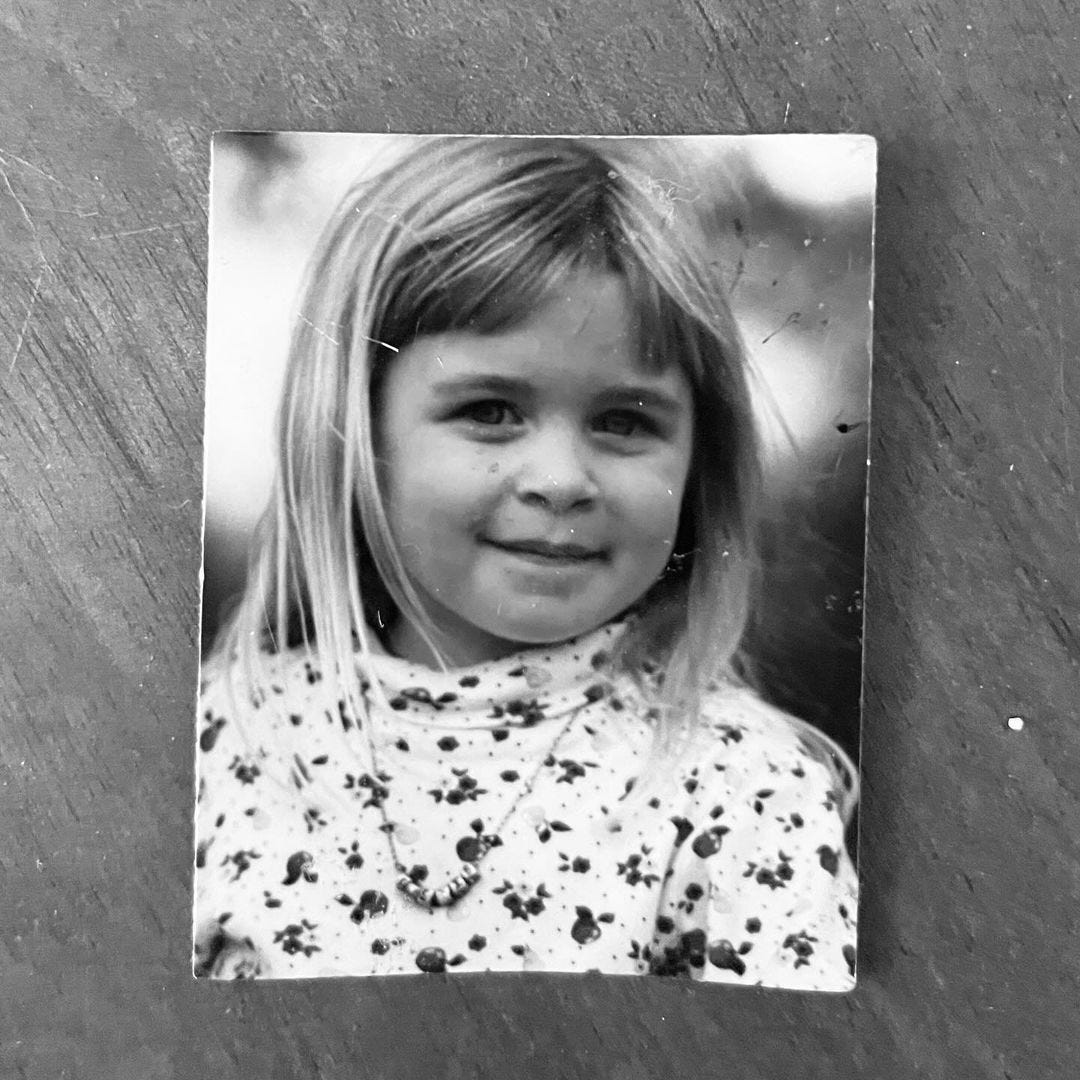
Little Ghost Selves
As a recovering dweller, I often find myself lingering on details from as far back as grade school. When I think about the past versions of me, I've tried to neatly tuck away, and out of sight, it isn’t difficult to access the rap sheet of their crimes.
I think about the girl I was at 13, hunched over a glowing computer screen, her AOL Instant Messenger screen name a cringe-worthy "livelaughlove2332." With trembling fingers, she typed to her best friend about the gospel, her fear of hell palpable in every word. I wish I could go back in time, steady those frantic fingers (and unplug that computer). I'd tell her that her fear, however misguided, comes from a place of love. Someday, she'll understand that love is far greater than any doctrine.
I think about the girl who, at 16, let boys tell her which parts of herself were worthy of love. She tempered herself because a boy said she was too much. She stopped speaking confidently in public because another boy would remind her how 'stupid' everyone thought she was. She even stopped wearing the clothes that made her feel like herself because some boy said she needed to be more 'regular' or ‘modest.’ I wish I could sit beside her and take her hands in mine. I'd tell her she doesn't need to shrink herself for any man. That she's capable, kind, and has so much to offer the world. I want her to know that someday, she’ll find herself in a home she builds where she gets to experience what it means to be entirely known and deeply loved.
And I can't forget the 19-year-old bride I once was, walking down the aisle toward a boy she knew, in her bones, she shouldn't marry. A boy who had already shown his unkindness. She was more afraid of admitting failure and disappointing others than of losing herself. I want to look her in the eyes and tell her, "It's going to be okay. You couldn't find the courage this time, but good things will come. It will get harder before it gets easier, but this won’t be forever. One day, you'll be strong enough to walk away."
But I can't do any of those things. I can't change the past. I can't protect that girl from the heartaches and mistakes that shaped her. That shaped me. And for a long time, I didn’t have any interest in reconciling with her either.
How I Stopped Running from Myself
For years, a crucial part of me lay dormant—the idealistic artist who must create or risk rearranging the entire house out of restlessness.
I had filed away this creative spark as if it were a childish tendency or a coping strategy I no longer needed (spoiler alert: I always need it). As a high achiever with a melancholy soul, I often found myself in an internal tug-of-war, my true passions askew while my more practical skills took center stage.
I excel at things I don't love, and the world rewards me for it. "This is your calling," they say while sidelining the parts of me I cherish. "That's not your gift," they insist, redirecting me to XYZ. For years, I followed their lead, leaving a piece of me perpetually unfulfilled.
Weary from the traumas of my 20s and searching for wholeness, I returned to therapy. Sometimes, you need a professional to echo what your friends have been saying all along.
Turns Out There are Always More Questions
This time, it was a new therapist in an old Florida home converted into a therapy center. The wood floorboards that withstood years of humidity creaked as I made my way up the stairs and onto her couch. The afternoon light gleaming through the slats of the blinds created a haze as its outlines danced next to candlelight in the shadows on the wall.
My new therapist, the first one to tell me I was powerful rather than flawed, sat across from me in an old recliner. While she had heard my brief intro on our phone consultation, she got the full experience this time.
Chronically unable to hide thoughts or feelings, I walked her through the story of my life, as much detail as I could remember, catching her up so she could see exactly what she was dealing with— all the baggage I brought into the room, the false beliefs, the years built up.
When I told her about all the parts of myself I wanted to get rid of, I spoke in intense (and possibly violent) terms. I wanted to rid myself of this part of me— kill this part of me. Those pieces in question— my cynicism, my jealousy, my resentment.
I was self-aware. I was taught that this is the goal, to recognize your flaws and then rid yourself of them. Raised in a religious background, I was familiar with self-loathing, while not as punitive as Martin Luther, somehow “a sinner saved by grace” still made its way into my subconscious.
What I wasn’t prepared for was to be met for the first time with a new perspective.
She smiled across the room at me, and still new to one another, asked if she could give me some feedback.
"Of course," I consented.
Meeting my probably aggressive, passionate stance, she spoke more gently, with compassion this time.
"What if this part of you belongs? What if it's here for a reason?" she inquired.
Her questions sat in the air momentarily, and I was unready to grasp and take hold of them. A bid, a serve, and it was my turn to respond.
Internal Family Systems, developed by Richard Schwartz, views each person as a system of inner parts led by a core Self. The goal is to recognize and reparent these parts—especially those we've rejected—showing them the acceptance they've never received.
It took me time to begin to ask myself the questions that my therapist posed.
But then came a small posture shift— like clenched fists melting into open palms. Maybe it didn't happen all at once, but a little bit at a time, week by week, as I returned.
I don't know if I would have been ready to listen before, so convinced of my own rightness and my past self's wrongness. But I was stuck and wanted to get unstuck.
What if?
What if all those parts of myself I'd wanted to extract like live coals from the flame, what if they were how I made it this far? What if the "me" before, all the versions of me, the women who got me here, though flawed they may be, also helped me survive? What if my cynicism was a shield that reminded me not all can be trusted, my jealousy a reminder of my desires and purpose, my anger a call for justice? What if they were facades that needed to be uncovered rather than shattered? What if beneath, it was just a girl who looked like me who dreamed of more for her life than nursing old wounds?
The Peace Offering
And so slowly, I began to become curious. I began to try to speak to myself with compassion, to try to see the good in my former self.
I began the painstaking process of trying to excavate the person I was beneath abandoned identities and the different shapes and forms I've taken over the years.
And she was still there. All of those little ghost selves.
I found her in the magic of a string of letters arranged on a page just the right way, giving language to a feeling I could never reconcile or name. I found her in the fierce protectiveness I feel for the vulnerable, for those who remind me of former versions of myself, desperately seeking their liberation. I found her in the quiet moments, the minor key, and in the cool mornings when the world is still waking.
I found her in the mirror, in the tiny cluster of burst blood vessels that stamped itself under my eye, the one I got from that one terrible year. I found her in the freckles that border the bridge of my nose, reminding me of where I came from. I found her in the softness of my belly, skin still retreating from the years that my body carried more than my own soul.
The Myth of Innocence
The poet Louise Gluck wrote about the myth of Persephone in her poem "The Myth of Innocence." Gluck writes about maturing and longing for the innocence we lost. She wrote,
"A woman will return, looking for the girl she was."
For years, I've returned to my past self to she was properly punished, rereading her sentence, filling myself with shame and regret.
But today, my return is gentler.
I think about the girl who viewed life with a romantic lens, idealistic to a fault. The girl who was filled with longing for the life she felt she was meant to live, with faux depth and a heart ready to take on the world. The girl who loved too hard and trusted too easily. For so long, I've tried to distance myself from her, seeing her as naive, misguided, even foolish.
What if the very qualities I've been ashamed of – the earnestness, the intensity, the unguarded heart – are not weaknesses to be overcome but the shape of who I am?
IFS includes meditations when you can talk to these parts of yourself. As someone who probably leans on logic as a protective measure at times, suspending my disbelief was a process.
But little by little, I could try to find kind words for those former selves.
Coming Home to Myself
My son is in sixth grade, and last night, as I was already writing through a draft of these words, he sat across from me, a sheet of notebook paper and pencil in hand, as he wrote his English assignment for that day: A Letter to My Future Self.
He didn’t know what to write, so we worked on an outline of how he could approach it. I told him that in one of the sections, he can remind himself of who he is because someday he might need that reminder.
He wrote the line, “No matter what people say, you are you. And that’s one thing I love about you.”
His simple words carried a profound truth. Why couldn't I extend the same compassion to my past self?
To Her
Inspired by my son's compassion for his future self,
To the girl I was – the one so full of hope and fear, of grandiose dreams and crippling self-doubt:
Thank you for keeping your heart open. For your romantic dreams about what the world could be. Thank you for giving of yourself, even when you might be judged by the people spectating. You never needed to hide away.
Thank you for doing what you needed to do to help us survive. Thank you for having integrity, grit, and passion. Thank you for caring, even if it's sometimes too much. Thank you for continuing to get back up after getting t-boned by some tough blows. Thank you for learning to listen to your gut, and thank you for your courage to step away from places that no longer served you, even knowing rejection would follow.
Thank you for all the things I couldn't accept for so long: your messiness, your chaos, your intensity. These 'flaws' are the raw material of your resilience. You are not something to be ashamed of. Please don't hide yourself away. I know the things they have said that cause you pain, but someday, you'll learn that their opinion of you matters very little, maybe even not at all.
I know that all that power bubbling just beneath your surface feels like a roaring wave right now. I know that you will do anything, will yourself to become anything, anything that is needed to take care of the people you love.
You will reach the point you break, and the break will be your ticket to freedom. You'll reject everything you have known. You'll grow stronger because of it. You'll find that your stamina is beyond anything you have realized. That your strength is greater than you know.
I'm proud of your grit and tenacity, your open heart and instinct for community, the way you nurtured others and yourself through words, and your priority for creativity and authenticity.
I'm owning all of the story now. Thank you for bringing me this far.
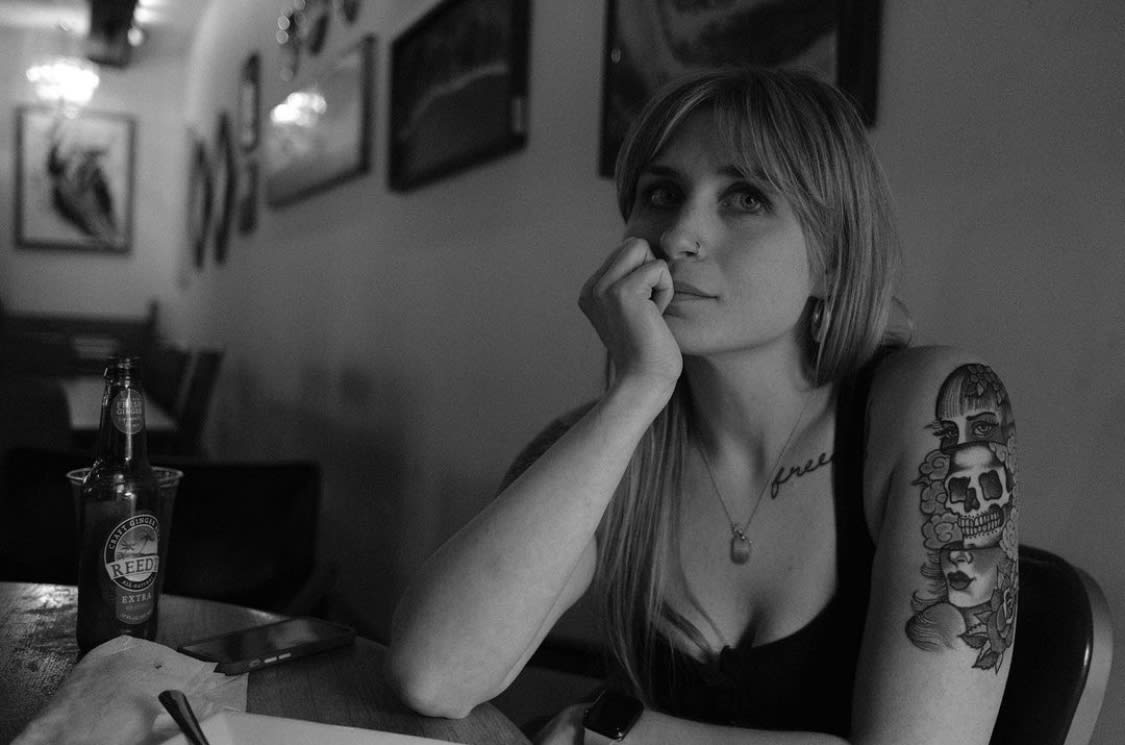
"You will reach the point you break, and the break will be your ticket to freedom." ❤️
You know, it's so interesting that the context in which I most knew you was "that girl" you talk about here. What can I say -- I'm so glad I met that girl. Because that girl knew -- even then -- that she should never stop learning. And here you are now. Still learning. I love that about you.